
A Record-Setting Pace
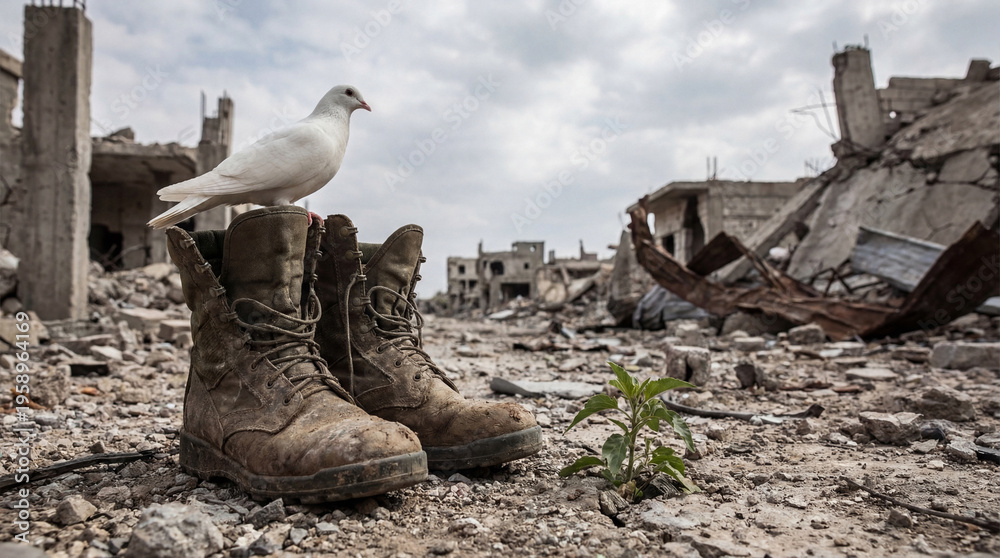
Wars in Iran, Ukraine, and Israel have drawn attention away from a stark fact: armed conflict is on the rise worldwide in and between states. Two Swedish think tanks with impeccable credentials report the depressing figures: the Uppsala Conflict Data Program and the Stockholm International Peace Research Institute. SIPRI’s annual report for 2025 notes: “More people were killed in armed conflict, were forced from their homes or needed humanitarian assistance than in recent years, probably for decades. On many battlefronts, peacemaking was non-existent or stalled” (https://www.sipri.org/sites/default/files/SIPRIYB25c02.pdf). The Uppsala program notes that there were 65 armed conflicts in 2025, resulting in the highest level of deaths in the 2020s since the 1994 Rwandan genocide–over 245,000 in 2025 (https://ucdp.uu.se/year/2025). Most of these conflicts occurred between states, as did the greatest number of deaths.
Reporting on these figures, the New York Times (July 13) said they represent a break from the “relative peace” of recent years. “Relative peace”? Hardly. From 1994 to now there have been plenty of civil wars and attacks by terrorist groups in central Africa, border conflicts in Southeast Asia, and nearly constant fighting throughout the Middle East. What these new reports signal is that the number of deaths is considerably higher these days than in conflicts over the last thirty years, not that the past has been relatively peaceful.
Aside from wars between countries, many armed conflicts are civil wars, notably in sub-Saharan Africa. The bloody fighting in Sudan is one of the worst cases. Major parts of the county are controlled by the Rapid Support Forces (RSF), which has a history of committing atrocities. News reports indicate that about 600,000 people are facing severe shortages of food, water and medicine. “Another human rights catastrophe is unfolding in Sudan,” the UN high commissioner for human rights, Volker Türk, said. The death toll is very high, as is the flow of refugees to nearby countries. The military-backed Sudanese govt has also committed atrocities, according to the UN. Both sides in this civil war attack ethnic groups, Arab and non-Arab.
Notable Features of Armed Conflicts
Two features of armed conflicts today are the large number of non-state armed groups involved in them and the involvement of outside powers. The SIPRI report cites an estimate of the International Committee of the Red Cross (ICRC) that “around 450 armed groups were active around the world in 2024 (195 in Africa, 89 in the Near and Middle East, 84 in the Americas, 76 in Asia and the Pacific, and 11 in Eurasia), with at least 130 of them considered to be parties to an intrastate armed conflict. According to the ICRC, an estimated 210 million people resided in areas fully controlled or contested by such groups, 19 million more than in 2023.”
The role of outside powers can be illustrated by what is happening in Sudan. Whereas no outside power has stepped in to attempt to mediate a cease-fire and stop the slaughter of innocents Saudi Arabia, the United Arab Emirates, and Iran are supporting one or the other side in the war. Outside actors have also been involved in fighting in Myanmar, Ukraine, Yemen, and Syria among other countries.
The SIPRI report identifies several other disturbing features of armed conflict today. One is the increasing recruitment of children to serve as soldiers. Another is the widening use of new weapons such as drones and improvised explosive devices (IUDs)—a trend, says the report, that “underscores a growing reliance on remote and indiscriminate weapons and tactics in warfare, with harmful consequences for civilian populations. The Middle East, Ukraine and the Sahel are areas that were subject to particularly high levels of explosions and remote violence.” A third trend is sexual violence in warfare. And a fourth is “the growing importance of critical minerals both as a key component of military hardware and as a source of potential armed conflict.”
Consequences: More Destruction, Little Peace
All these changes have dire consequences, first of all for civilians caught in the middle of conflict. Forced displacement was a record 123 million people as of mid-2024, including 72 million internally displaced people and 32 million refugees. Civilians also face increased food insecurity, such as famine in Sudan and Gaza. International humanitarian law is being violated even more today than in the past, though the International Criminal Court and the International Court of Justice are becoming more involved than ever before as well—as witness their rulings on genocide in Israel’s conflicts. Finally, these conflicts also contribute importantly to environmental destruction. As examples, the SIPRI report cites the civil war in Sudan, which has “exacerbated the severe impacts of climate change on rural livelihoods, while in the Central African Republic natural resource mismanagement, illicit mining and the illicit trade in timber have helped to fund the protracted conflict to the detriment of climate action.” In Myanmar, “the intersecting crises of conflict and climate change have created opportunities for elites to exploit vulnerable populations and accelerate extractive activities leading to further environmental degradation.”
Sadly, but not unexpectedly, peace agreements that hold are on the decline, in particular agreements between states as opposed to local agreements. Even then, such agreements are usually tentative and partial, subject to renewed fighting. The basic problems with peace agreements are that the root causes of conflict are rarely addressed and that civilians are rarely if ever represented in peace talks. The positive news is that multilateral peace operations under the UN or the European Union remain very active. There were 61 operations in 36 countries or territories 2024, of which 21 were in sub-Saharan Africa, 19 in Europe, and 14 in the Middle East and North Africa. The UN conducted eighteen of those peacekeeping operations and the EU seventeen; the African Union added five. In all, nearly 100,000 troops and civilians took part in peacekeeping.
Realistically, however, these numbers are nowhere near sufficient to intercede effectively in conflicts much less prevent them. In recent years, reports have emerged of corruption and bad behavior by peacekeeping troops. The more effective path to dealing with conflict might be to use the good offices of trusted outside parties, such as Pakistan and Qatar in the US-Iran war and Norway and Algeria in past conflicts in the Middle East. Even then, as the current impasse in the US-Iran talks shows, negotiations can never succeed unless the parties to conflict want to settle.

