
A New Government in the Making
Israel’s Prime Minister Benjamin Netanyahu is toast. He tried every which way to get out from under the fact that he lost the election, his party Likud falling 8 votes short of the 61 seats needed for a majority in the Knesset. The great surprise, though, was that Arab parties won 19 seats. Netanyahu, mimicking Donald Trump, charged without evidence that the Arab votes were obtained by fraudulent means. Netanyahu said that Qatar had put large sums of money into Arab voters’ hands and that many voters had stuffed ballot boxes. Top officials in charge of the elections, as well as Netanyahu’s chief opponent Gadi Eisenkot, vigorously denied the allegations. But Likud said the election amounted to a “foreign takeover of the Knesset, the Islamization of Israel, and the overthrow of right-wing rule.”
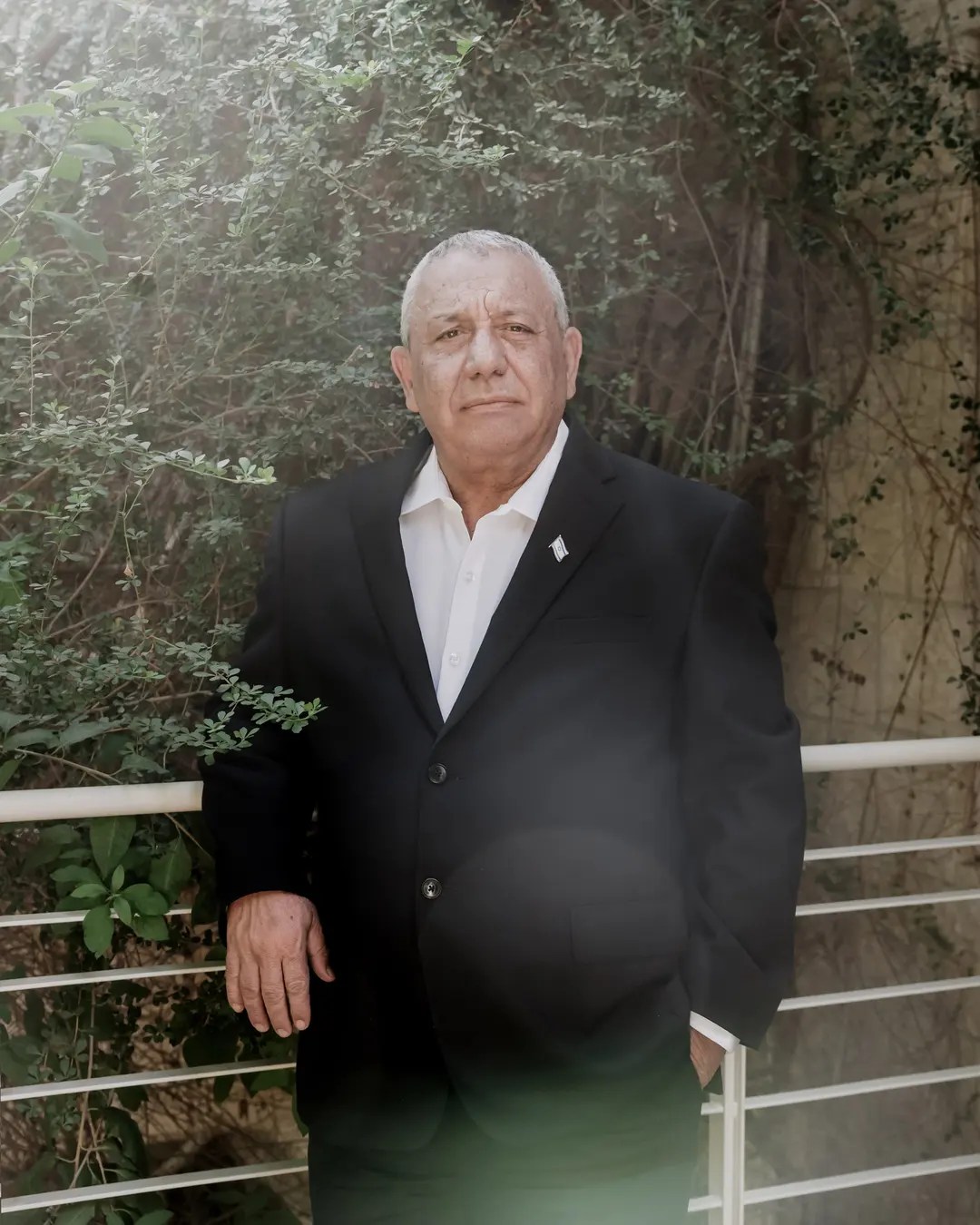
What Likud and Netanyahu most worried about was that Eisenkot, whose party won 48 seats, would strike a deal with one of the Arab parties, Ra’am or the Joint List, to gain the additional seats needed to form a new government. Eisenkot did just that, obtaining support from the Joint List three days after the elections. It is striking that that happened, since the other main Arab party, Ra’am, seemed to be the more moderate choice. Ra’am focuses on local Palestinian issues such as crime and discriminatory housing, whereas the three parties that comprise the Joint List seek major changes in Israeli policies on Gaza and the West Bank, on Palestinian rights, and on Palestinian refugees. Joint List leader Yousef Jabareen said his party had decided to back Eisenkot in the hope of helping “to oust the Netanyahu-Ben-Gvir-Smotrich government” and improve the lives of all Israelis, particularly “Arab citizens, whose lives the last government made miserable in almost every way” (Ha’aretz, November 5).
Eisenkot received pledges of support from four anti-Netanyahu parties and the Joint List. But to form a new government, Eisenkot needed a commitment of at least 54 seats, one more than Netanyahu’s coalition and enough to rule as head of a minority, “national emergency government.” With the Arab party’s support, he obtained those 54 seats. On Saturday, Israel’s President Isaac Herzog, who has the last word on which coalition will be given the first opportunity to form a new government, decided to give it to Eisenkot, who now has up to six weeks to do so.
Where is Eisenkot Headed?
Eisenkot’s job will not be easy. He is determined to avoid another election. But some far-right parties will not work with the Arab parties. And Eisenkot reportedly is demanding that the Arab parties label Hamas a terrorist organization. Netanyahu lurks in the background, ready to resume command if Eisenkot fails.
What will Eisenkot do if he becomes prime minister? The Times of Israel reports his view: “No matter how you look at the numbers, a majority of Israeli citizens, by a margin of more than half a million votes, voted against the government of October 7 and draft evasion, and in favor of change,” The statement suggests Eisenkot will establish a state commission of inquiry into the failures that led to the October 7, 2023, introduce mandatory service for the ultrareligious, and repeal the judicial overhaul laws passed by the outgoing government. Should Netanyahu restart war with Iran, Eisenkot says he would only support “cases involving direct and immediate threats against Israel that cannot wait.”
Questions remain about Eisenkot’s policy views with respect to the Palestinian population. How will the Joint List’s support shape Eisenkot’s policies in Gaza and the West Bank? Will its support mean that Eisenkot rejects the right wing’s claim that Israel is a Jewish rather than an Israeli state? Will he confront the far right’s violence and illegal settlements in the West Bank and its genocidal evictions of Palestinians from Gaza? Will he endorse the two-state solution?
Toward a Shared Future
A Palestinian community organizer has written eloquently about the foundational political and moral message of the elections. “It is citizenship, which the State of Israel has sought to strip of any meaning, that has become the tool with which Palestinians are claiming their place and their right to influence the country’s future. And precisely those whom the government sought to portray as a threat to the state have become the ones who may open the door to a different political path forward. A world in which Palestinians and Jews can begin to reimagine their shared lives, not out of fear or a relationship of domination, but out of mutual recognition and equality” (+972, November 6, 2026).
The new leadership’s recognition of a shared future would be truly revolutionary. Israelis would have to accept that the idea, and its translation into social, economic, and political changes, will strengthen Israel’s security. They must reject far-right propaganda about a terrorist threat and the state’s “Islamization.” These elections offer Israel a lifeline to its own and the Middle East’s positive transformation.

