
If we read nothing other than the mainstream media, we are likely to be persuaded that China has the world’s most robust economy, that its leadership in many aspects of international trade mirrors its strengths at home, and that its economic problems are far more manageable than are problems in the US. All those conclusions need a second look. The truth of the matter is far more complicated==and quite worrisome to many Chinese economists and sociologists.
Few question China’s international economic prominence. The usual indicators are an enormous trade surplus of well over $1 trillion, major loan programs to around 150 countries under the Belt and Road Initiative, and leading trade partnerships with virtually all Asia-Pacific countries not to mention countries beyond the region. To be sure, each of these indicators requires qualification, but here I want to explore another side of the story: the consequences for Chinese society of the country’s international successes.
Disillusionment and Demography
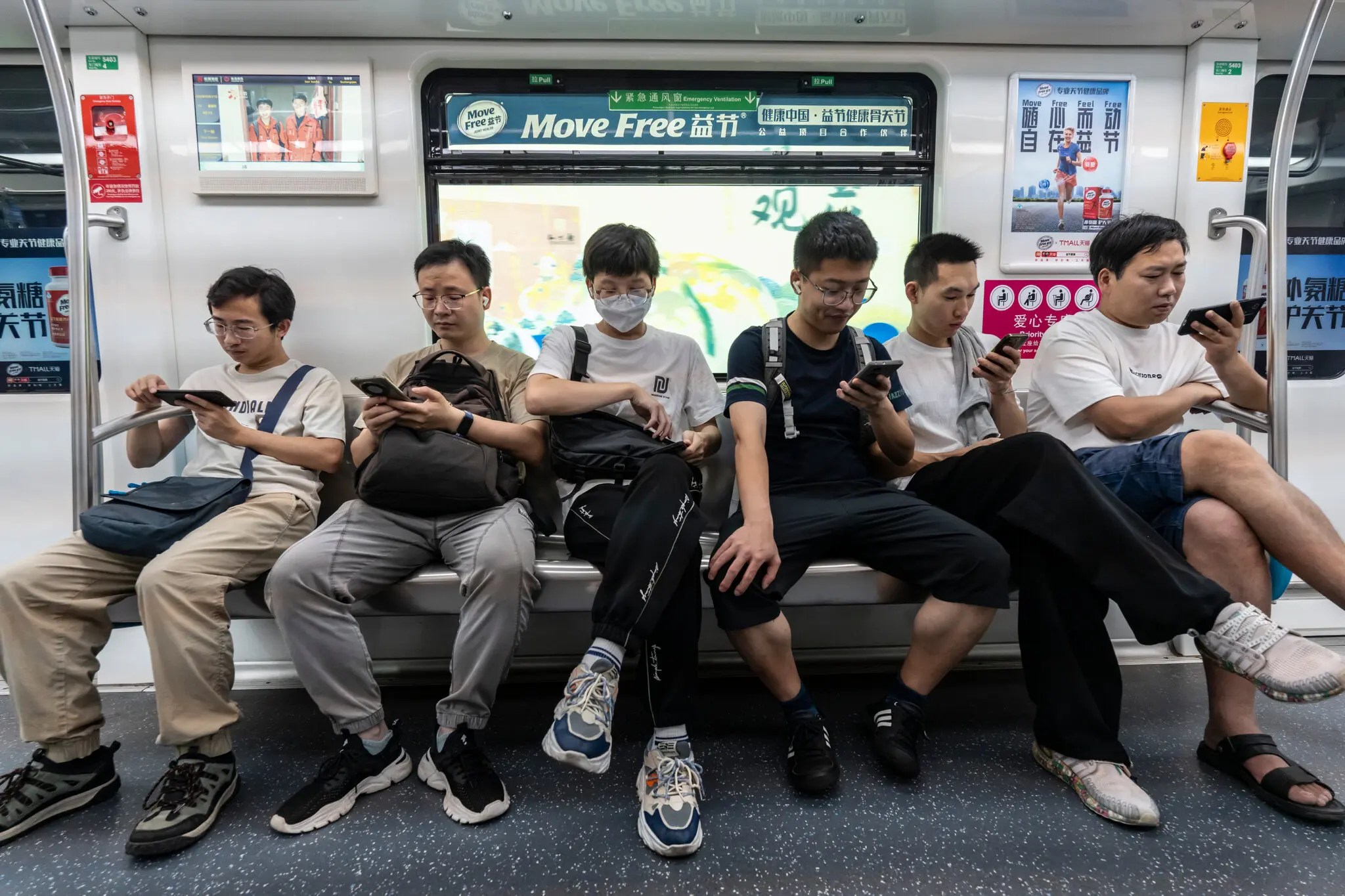
The first consequence is a failure to meet rising domestic demand for goods and services. China is an increasingly rich country, but its capital is being put primarily at the service of high-tech manufacturing for export and subsidization of the high indebtedness of state-owned industries and local governments. Now that poverty has largely been overcome and most everyone can afford a TV, an apartment, and maybe even a car, people’s expectations are rising–for improvements in home buying costs, interest on savings, child care, and numerous other ordinary expenses. Those expectations are not being met. Young people are losing hope of a good job. “Anemic job growth has pushed more than 280 million Chinese into gig economy jobs, up 75 percent from 2019, according to the China New Employment Forms Research Center. While China’s factories and technology labs are global stars, many people are stuck in such dead-end jobs, struggling to find cause for optimism in a stunted domestic economy,” David Lynch writes (https://www.washingtonpost.com/business/2026/09/20/chinas-leader-pursues-global-power-many-its-citizens-feel-left-behind/).
Chinese want more, but party-state leaders, while talking about the need to address domestic consumption, are actually giving even more weight to international commerce. Why? Because national power for China means commercial power in competition with the US and the West. Thus, whereas average household consumption is around 64 percent of the economy in the major countries, it is only around 40 percent in China.
A second consequence that stems from the first is demographic: a falling birth rate, meaning fewer young people earning lower wages and a rising percentage of the population that is old and requiring social security funds. Carl Minzner, writing in Foreign Affairs last week about “China’s Long Twilight,” offers some sobering statistics on China’s population shift: “China’s total population peaked at 1.4 billion in 2021 and is now falling by three to four million people per year—roughly equivalent to losing one Los Angeles each year. By the 2040s, if China continues to follow East Asia’s descent to ultralow fertility rates, it will shed around one percent of its population annually—roughly ten million people, more than the population of New York City. At the same time, the proportion of China’s population aged 65 and older will surge, doubling from 15 percent today to around 30 percent in the 2040s, and then rising to well over 40 percent by the late twenty-first century.”
The Political Challenge
No Chinese leader can ignore the potential political implications of these socioeconomic trends. Young people who can’t make it in the gig economy are “lying flat,” staying at home after giving up on finding a job. Men who can’t offer a potential spouse a home with all the fixings are out of luck. Women who are discriminated against at the workplace or in job applications are angry. As Helen Gao writes from Beijing, “China’s social mood is somber” and increasingly confrontational as people’s expectations on being able to move ahead are not being met (https://www.nytimes.com/2026/10/02/opinion/china-anger-economic-frustration.html?searchResultPosition=1).
For a country with one-man rule as post-Mao China has again become, these economic and social problems can only mean one thing: deeper repression. Xi, who will rule for several more years, is not the sort of person to liberalize in hopes of accommodating needed social change. So far I see no sign that China might take an alternative direction, rearranging its economic priorities to confront social demands rather than continue seeking leadership in globalization.
In short, China is paying a long-term price for its economic successes. And it’s not just sluggish overall growth. It’s the social consequences of growth. Over the past year, Xi Jinping and other high officials have emphasized that the new economic target is no longer high GNP but “high-value” growth. “High-value,” however, refers to advanced technologies—AI, EVs, semiconductor chips, long-lasting batteries—not to improved and lower-priced domestic services. Chinese citizens are right to wonder why exports have a higher priority than their quality of life. Will the Chinese Communist Party leadership eventually pay a price for that priority?
But we should not be more self-confident as a result. As Mintner writes: “China’s trajectory is ultimately a warning: demographic decline and political erosion can hollow out any great power—including the United States.”


Nice. Wish we could include this one in the book.
And then — what? It’s Double Ten Day and no mention of the Taiwan holiday?
Very interesting Mel😊
Greetings from Buenos Aires!
Hope u r enjoying Oct baseball🥳🥳🥳
Sent from my iPhone