
The New Reality
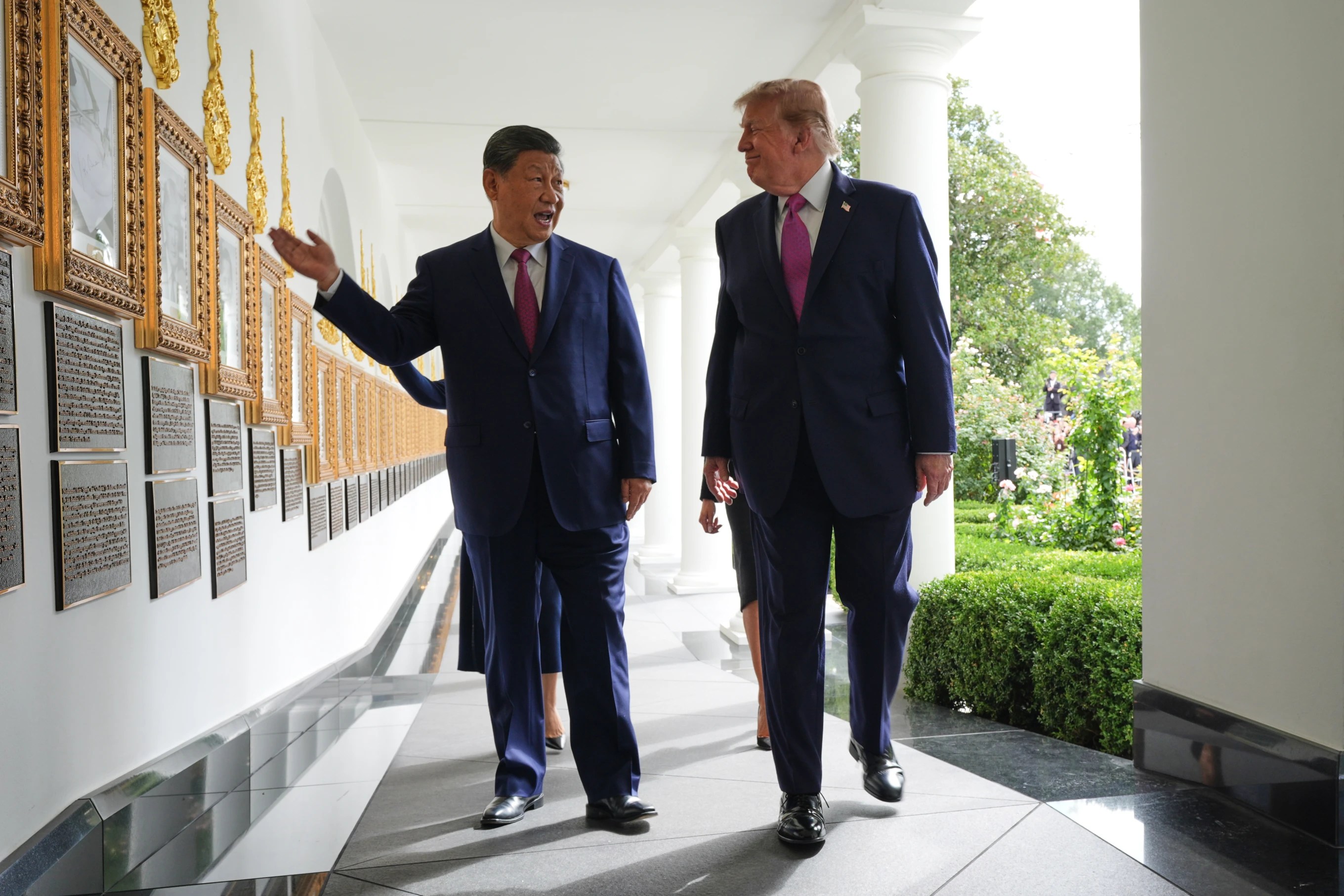
China’s President Xi Jinping’s sixth visit to the US has come and gone. Expectations were low for any kind of breakthrough on longstanding issues such as Taiwan’s status, human rights, the SCS, and especially tariffs. The emphasis was on pomp and circumstance, which Trump provided in abundance. Xi probably was not all that impressed. Judging from his comments in Washington, he valued the chance to extol China’s newly recognized status, which Trump has endorsed: that China and the US, now “correctly getting along,” have achieved “constructive strategic stability” (设性战略稳定关系). What that phrase describes is a structural change in relations by which the US recognizes China’s equal status and accepts that a consensus has been reached on a stable relationship. Differences will be better managed and direct confrontation avoided. The two countries, said Xi, agree to “hold the line of no conflict and no confrontation.” Real progress in relations, Xi seems to be saying, depends on how well this management works. And that’s far from certain.
We have to keep in mind that for the Trump administration, accepting stable relations with China is an extraordinary shift. During his first term and well into his second, tariff wars dominated the China agenda as a key element in a confrontational approach that expanded on Joe Biden’s trade policy. For a while, Trump tried to play the strategic triangle game, attempting to leverage a soft Russia policy to moderate China’s aggressive trade policy and its support of Russia in the Ukraine war. All of that failed: the Russians strengthened ties with China, and China did not flinch in the tariff war. The anti-China hawks in Trump’s administration, such as Peter Navarro, lost ground. US policy now appears to be based on “spheres of influence”—leaving Europe to Russia and Asia to China while the US focuses on the Western Hemisphere and deepening problems on the home front.
Xi, too, needs to focus on the economy as China begins its fifteenth five-year plan. But he also sees opportunities in Trump’s unpopularity at home and abroad and his economic woes. And he is seizing on them—“taking advantage of another’s troubles,” as the Chinese saying goes. The Chinese view “America First” as a retreat from the global competition, leaving the field to them. Their opportunism has taken several forms: diversifying trading partners, by shifting trade to Latin America, Southeast Asia, and the Middle East while reducing trade with the US; winning favor in the Global South by selling low-priced EVs and providing wind farm technology and solar panels under the Belt and Road Initiative; pushing for greater self-reliance in advanced technologies such as semi-conductors and AI in response to US export controls while imposing China’s own controls, such as on rare earth minerals; and focusing on a new trade deal with Europe and Canada, whose ties with the US are fraying.
Few Agreements
Xi therefore visited with a much stronger hand than Trump. While Xi would like US tariffs reduced, especially on advanced technology, Trump needs to show that his tariff war can save manufacturing jobs and forego the need for a deal on AI. But all he got was an agreement to keep the “trade truce” for two more months. Xi did not budge on opening the door to US imports of China’s rare earth minerals, and the US didn’t budge on exporting US advanced technology to China.
On AI, Trump has made clear that he thinks regulating AI is a “hoax.” He’s unwilling to regulate AI, least of all by an international agreement. Thus, he stood alone while Xi, in remarks in Washington, proposed US-China dialogue on AI, reiterated a promise made to Joe Biden to keep nuclear weapon matters in human hands, and called for AI to serve human needs.
Several other critical issues in US-China relations were apparently not touched upon. Trump apparently did not seek the release of Americans being held in China or of Jimmy Lai, the Hong Kong publisher and human rights activist. China’s closeness to North Korea as the North expands its nuclear and missile program, China’s aid to Russia in the Ukraine war, and China’s electronic components exports to Iran (which could be used in Iran’s drone and missile program) were not mentioned by either side in public comments, though the US ambassador to China insisted afterward that Trump pressed Xi to stop military-related aid to Iran.
Xi did extend an invitation for 100,000 US students to visit China over the next five years, but that surely is contingent on the US not denying visas to numerous Chinese students and researchers. Xi also demanded that Chinese companies in the US be “treated fairly,” perhaps his way of suggesting that both countries reconsider their “entities lists” that bar certain companies from doing business.
Taiwan Still the Critical Issue
On the issue most important to China—preventing Taiwan from seeking independence—Xi repeated that position. Nothing more was said publicly. Trump’s one major “bargaining chip,” as he has put it, is the $14 billion arms sale to Taiwan that has sat unapproved on his desk since May. Xi has called it a red line in relations. Did Trump use the chip? We’ll see; but as of now, his record of support of Taiwan is inconsistent at best. He has sometimes criticized it for stealing semiconductor chip-making from the US, not investing enough in the US, and not increasing its military budget sufficiently, while at other times Trump has supported large weapons sales to Taiwan and maintenance of defense and political ties via military trainers and official visits. And Trump is surely aware that despite high tariffs, Taiwan as of July had risen to third place among importers, displacing China. But as a transactional president, Trump is fully capable of selling Taiwan down the river if an offer from China appeals to him.
It is perhaps fitting that on the day Xi visited the White House, no major US television network covered the event because of Trump’s ban (which was overturned by a federal judge but briefly defied) on CNN, Politico, and MS-Now. The media may not have missed much, but the Chinese must feel a bit smug that the Americans engage in the kind of press censorship they’re always criticizing about China.


Another great one. Love your title ;-). Talk Wednesday.
Jim
James R. Newcomer, Ph.D. Developmental and Line Editing NewcomerEdits.com jrnewcomer@protonmail.com (503) 351-9330