
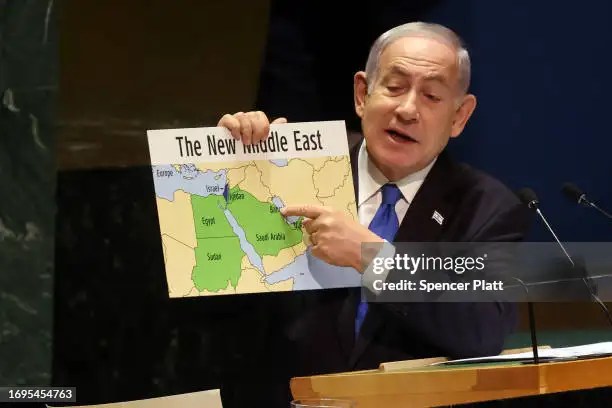
Israeli Prime Minister Benjamin Netanyahu’s chances of reelection hinge on carrying on the war Hezbollah and keeping the fires burning with Iran. At the same time, he must assuage Donald Trump, who has called Netanyahu “crazy” for undermining US-Iran peace talks by continuing military action in Lebanon and, just last week, exchanging fire with Iran. In that exchange, Iran fired missiles at Israel and Israel bombed a petrochemical plant in Iran as well as bombed Hezbollah positions near Beirut. Iran and Israel then deescalated, but not before Netanyahu, reportedly against Trump’s wishes, had retaliated against Iran.
The US-brokered cease-fire between Israel and Lebanon is a fiction. No sooner was it announced than it was violated by Israel and Hezbollah. Hezbollah, which is required to stop fighting under the agreement, explicitly rejected it, arguing that it did not take part in the latest arrangement and that Israel is not required to make any concessions. A Shiite leader close to Hamas said Hezbollah would stop fighting when Israel agreed to withdraw completely from Lebanon. Which Israel is not going to do. “To truly stop this,” Netanyahu said,” we have concluded that we need security zones” as part of a “fundamental change” following the October 7 Hamas attack. “Perhaps when Hezbollah is dismantled, we will reconsider.” Thus, Israeli air strikes continue, notwithstanding Netanyahu’s supposed acquiescence to Trump’s wishes that he order them to halt. As the New York Times puts it: “For all the diplomatic fanfare surrounding the newest cease-fire agreement in Lebanon, the reality on the ground… was grimly familiar: Israeli airstrikes, Hezbollah rockets and little sign that the war had stopped.”
Netanyahu’s situation would seem to be shaky. His determination to “dismantle” Hezbollah, like his aim to destroy Hamas, is probably unrealizable—and it risks renewed Iranian missile strikes on Israel and other Gulf states. Yet the Israeli far right cabinet and much of the public supports continuing to go after Hezbollah. And Netanyahu’s leadership thrives on warfare—incentive enough to defy Trump. At some point, defiance might also be costly, since Iran has been firm that stopping Israeli attacks on Hezbollah is one key to reaching an agreement with the US.
Trump keeps telling Netanyahu to stop fighting and keeps saying a peace agreement with Iran is just a few days away. But here’s where Netanyahu has hope for his strategy: The fighting in Lebanon is only one of several outstanding issues that are obstructing a US-Iran agreement. Another is Iran’s nuclear enrichment. And a third is Iran’s frozen assets, as reported by CNN on June 5 in an interview with a top military adviser to Supreme Leader Ayatollah Mojtaba Khamenei. The adviser said a deal with the US requires that it unfreeze $24b in Iranian assets—half once an agreement is signed, the other half later. Trump will see that demand as similar to what Obama agreed to in the 2015 nuclear deal—and he will surely reject it.
The likely future is more rounds of fighting and fewer opportunities for the US and Iran to overcome their differences. Netanyahu is banking on that.


Is anyone else suspicious that Trump is jerking the stock market around so he and friends can make billions?