
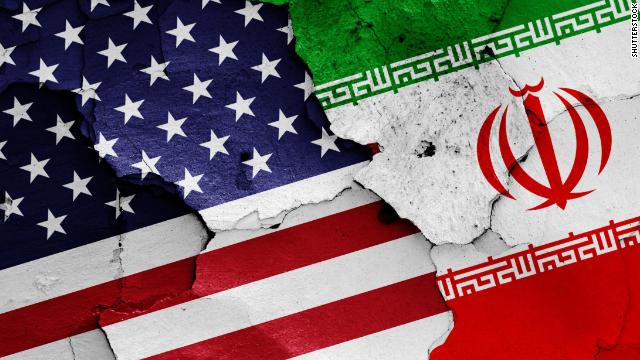
As another week of Trump’s war begins, it becomes ever more clear that all his presumptions about how the war would go have proven wrong. Iran’s economy has bent but not folded despite a blockade of its ports. Its ability to control the Strait of Hormuz hasn’t been eliminated. Iran still has drones and missiles for retaliatory attacks. The regime’s control of the population remains. Gas prices and the cost of oil remain high. The war goes on (https://www.nytimes.com/2026/04/16/business/economy/iran-oil-blockade.html).
Talking or Fighting?
Trump’s deadline on the cease-fire was set to expire Wednesday night, but Trump extended it indefinitely at the request, he said, of Pakistan. Vice President JD Vance’s plan to travel to Islamabad for a second round of talks with Iran was on, then off, now on again. Trump accuses Iran of violating the cease-fire numerous times, yet he’s certain that Iran will buckle. Iran has “no choice. We’ve taken out their navy, we’ve taken out their air force, we’ve taken out their leaders,” he said on his social media. Now, predictably, he has backed off. But the US blockade of Iran’s ports remains. So which side has violated the cease-fire? Who knows where things will stand by the time you read this.
Several developments prior to this hitch in the peace talks point to more confrontation rather than serious negotiations. Last week, Iran again declared the Strait of Hormuz closed to traffic following Trump’s insistence that the US blockade of Iran’s ports will continue until a deal with Iran is completed. Threats to Iran resumed. Pete Hegseth bragged that the US is “reloading with more power than ever before” and is “locked and loaded” for more strikes on “dual-use infrastructure.” Trump repeated his earlier threats to target civilian infrastructure such as power plants should a deal fail to materialize, saying “No more mister Nice Guy.” And in answer to anyone who says such attacks would constitute war crimes, Mike Waltz, the UN ambassador, said it is perfectly legal to attack factories and bridges since they are “comingled” with military uses.
Then on Sunday, the US Navy seized an Iranian-flag cargo ship as it made its way through the Strait of Hormuz. The ship is said to have ignored orders to stop. Iran charged the US with piracy. This comes after Iran attacked two ships in the area. The US Navy has blocked nearly thirty ships from entering or leaving Iran’s ports. In short, the cease-fire, which Iran claims Trump requested, is a mirage. Trump is all about threats: “We’re offering a very fair and reasonable DEAL, and I hope they take it because, if they don’t, the United States is going to knock out every single Power Plant, and every single Bridge, in Iran. NO MORE MR. NICE GUY!” He said he’s prepared to go back to bombing rather than extend the cease-fire.
Detached from Reality
Yet alongside threats are claims that the war is practically over, a deal with Iran all but secured. On Friday, Trump said the Strait of Hormuz was open and that negotiations “SHOULD GO VERY QUICKLY IN THAT MOST OF THE POINTS ARE ALREADY NEGOTIATED.” He told Bloomberg negotiations would be quick because “most of the main points are finalized,” including “unlimited” suspension of Iran’s nuclear program (https://www.washingtonpost.com/politics/2026/04/20/trump-iran-contradictory-statements/?utm_source=email&utm_campaign=engagement&utm_medium=engret&utm_content=042126). He also said in that interview: “I’m not going to be rushed into making a bad deal,” Trump said. “We’ve got all the time in the world.” This is crazy talk, detached from reality. He has no idea how big a hole he has dug—and the Iranians are in no rush to help him get out.
Trump refuses to concede that none of the main points in contention have been finalized. Besides the matter of the US blockade and Iran’s closure of the Strait, an enormous additional obstacle is Iran’s enriched uranium. Here we have another false Trump claim, that Iran has agreed to turn over the “nuclear dust” that US air attacks last year created. If true, that would be a major breakthrough, though it doesn’t affect Iran’s ability to enrich uranium in the future. But Iran has denied it made any such deal. More reasonable is an agreement that essentially follows the 2015 nuclear deal with Iran, in which Iran agreed to a limit of 300 pounds of uranium enriched to 3.67 percent. But after Trump pulled the plug on that deal in his first term, Iran started producing near weapons-grade material, announcing in 2021 that they had started enriching to 60 percent. Would Trump swallow his ego and reach an agreement that acknowledges Obama’s success?
A Deal with Iran is Possible
Which raises a related question: What would a “reasonable” outcome of this war be? By reasonable I mean an agreement that each side could claim as a victory because it would satisfy at least some of its presumed aims and save it from further inconclusive warfare. Iran might agree to reopen the Strait of Hormuz and officially acknowledge that it is not subject to closure by any country. In return, the US would end its blockade and recognize the “sovereignty and security” of Iran, thereby making the cease-fire permanent. On the nuclear issue, Iran would pledge never to produce or acquire a nuclear weapon, limit enrichment as noted above, and reopen the country to international inspection of its nuclear facilities. Finally, the US would agree to end sanctions on Iran step-by-step with Iran’s adherence to its pledges.
If an agreement along these lines were to take place, we would be back to the status quo before the US attacks with a few improvements that stabilize US-Iran relations. The nuclear issue would be put to rest for the moment, the Strait would reopen, sanctions on Iran would gradually end, and US forces would leave the Gulf area. All of which would point to one conclusion: that Trump’s war on Iran was needless, a terrible sacrifice of lives and economy.
 In the Human Interest - Mel Gurtov
speeSent from my iPhoneI recommend watching the video of John osoff speech
Here’s the link: https://youtu.be/cpwRZlwvhrE?si=qKyumVHSxuEyXHgy