
Stretching Presidential Power
Donald Trump has made waging war more centered than ever before on presidential prerogative. The same president who once fulminated against his predecessors’ penchant for going to war has turned into an imperial leader who can’t get enough of it. He has not merely built on past violations of law and the Constitution to make war. He has expanded presidential authority in exceptionally dangerous ways, taking advantage not only of Republican majorities in Congress but also of the Supreme Court’s decision that grants the President broad immunity on his actions.
Let’s be clear: Every President since World War II has tried to stretch his authority to act abroad. Whether we’re talking about Truman in Korea, Kennedy and Johnson in Vietnam, Nixon in Cambodia, George W. Bush in Iraq, or now Donald Trump in Iran, all abused presidential power. The President’s role as commander in chief has for a long time meant the power to deploy US forces wherever he judges “national security” to be in danger—and then challenge critics to reverse his decision. Deploying power is extraordinarily expansive, since “US forces” may include the CIA, corporate executives, special forces, mercenaries, and other agents besides the regular armed forces. Those agents have sought to topple governments, assassinated and kidnapped government leaders, tortured opponents, and bought off political parties and military leaders. In all these cases, Presidents have typically dispensed with legal concerns in determining when, where, and how the US will intervene abroad.
No Need to Consult
When it comes to war making and other uses of force, the Trump regime—for that is what it is—has outdone its predecessors in several respects: ignoring the Constitution, sidestepping Congress and allies on prior consultation, controlling information, defying laws governing the use of force, and making war a religious venture.
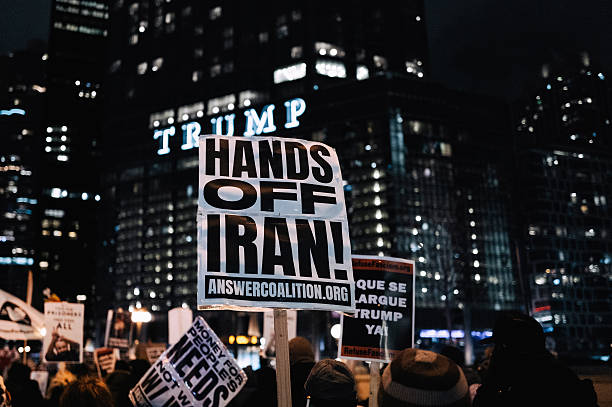
The Constitution’s grant of war making authority may mean little if a President decides that the use of US power abroad isn’t a war. Trump has done exactly that—first, by authorizing attacks on alleged Venezuelan drug boats in the Caribbean and the Pacific, followed by the kidnapping of President Nicolas Maduro for trial in the US; second, and most outrageously, by launching a six-week-long air assault on Iran. In Trump’s lexicon, “war” does not exist, only “military operations,” a bit of trickery perhaps learned from Vladimir Putin’s “military action” against Ukraine.
The role of Congress in war making used to mean advance consultation by the President with the relevant committees, adherence to restrictions imposed by Congress (such as the War Powers Act–WPA) on deploying US forces in combat, and bargaining over budgetary limitations that Congress might legislate. In previous years, Presidents have occasionally consulted with Congress and at least acknowledged the reporting requirements of the War Powers Act. (Note that the WPA has never actually stopped a military action in progress.)
Trump has cleared away all these potential obstacles. He and his top advisers have consulted with very few members of Congress, after the fact and offering precious little information. The WPA has had no perceptible impact on the regime’s war plans—least of all in an undeclared war. Every attempt by Democrats to bring Trump’s war on Iran to a halt by resolution has failed. Congress, controlled by the Republicans, has left the field to Trump to do whatever he wants, regardless of the expense, even when some of them have expressed misgivings about his war strategy (or lack of it) and obscene threats. Far from using the power of the purse, moreover, the Congressional majority is weighing the regime’s request for huge increases in the Pentagon’s war budget ($200 billion) and in its next budget cycle (to $1.5 trillion).
The failure to consult also applies to US allies. Trump has upbraided NATO for refusing to support his war, which is true. Some NATO countries, such as Britain and Spain, have rejected US use of bases there to attack Iran. All of them have refused to act to open the Strait of Hormuz. Trump may threaten to leave NATO, which is not within his power, but the blame rests on him for not consulting the organization before going to war. (If he had, he would have gotten sound advice and a suitable rebuff.)
Controlling Information but Not the Use of Force
Hand in hand with the failure to consult is the regime’s approach to information. It has persistently refused to state the war’s aims, accept intelligence findings contrary to its beliefs, and suppress information about its intentions. Every assumption on which Trump has acted—e.g., that Iran is close to having a nuclear weapon, that it is an imminent threat to US national security, that the Iranian people will rise up against their leaders, that assassinating Iran’s old leaders will bring “reasonable” new leaders to power, that the war will be over in a few weeks—has proven faulty. Yet the Trump regime has refused to reevaluate its war policies. Instead, Trump and Pete Hegseth have directly attacked journalists and news organizations that publish unfavorable war news. Hegseth has sequestered the press at the Pentagon to keep them as far from leaks as possible. (A federal judge has ruled that illegal.) Presidents normally regard the press with some degree of distaste, but Trump and Pete Hegseth have declared war on questioning.
The use of force also has some new components. One is reliance on Israel to conduct air strikes that target supposedly dual-use (military-civilian) entities, such as rail lines, bridges, and industrial plants. A case can be made that such targeting violates international law on protection of civilians. Moreover, the US has been generous in supplying weapons to Israel that are being used in the Iran war, in violation of US law. Second, Trump’s threats to bomb Iran “back to the Stone Ages” and eradicate a “whole civilization” are clearly war crimes as defined in the Convention on Genocide. Bombing desalination plants and energy facilities, as well as health care centers and schools, to prevent an entire population from having access to essential needs for daily life are surely also war crimes. Neither the President nor any of his advisers has expressed the slightest remorse over this devastation, which has also resulted in roughly 1,700 civilian deaths.
In God We Trust
Finally, we have the religion issue—Trump’s invocation of God to justify warmaking. Many US policy makers over the years have expressed the belief that God is on our side when the US uses force abroad. But under Trump that belief has become a fixture and not merely a prayer. Whereas Vice President JD Vance is reported to have diverged from Trump and Pete Hegseth in saying that he hopes God is on our side in Iran, the latter two are certain that the war is blessed by God. Trump took this a step further when, in his profane rant against the Iran leadership, he ended with a callous appeal to Allah. This denigration of Muslim belief is typical of a regime that actively promotes Christian nationalism.
A Reckless Regime
Beyond breaching intended constraints on presidential war making, we have one other that makes Trump’s war on Iran unique: His failure to explain why war is necessary, what it will accomplish in the national interest, and how long US involvement will take. Previous presidents have spoken regularly to justify military action abroad. Their arguments may have been unpersuasive or downright absurd, but at least they offered one. But now, the public, the press, and Congress get no consistent or meaningful rationale for putting soldiers in harm’s way and causing a global energy crisis. Trump has simply plunged ahead, oblivious to the obstacles to success, to public opinion, to his own promises, and to the law. Thus does his administration find itself engaged in a war that is widely unpopular, unsupported by European allies, and extremely costly for the US and the global economy. Previous presidents were defeated by engaging in unlawful and unpopular wars. Trump may well be impeached and removed from office in addition to suffering defeat. But all his troubles stem from his own recklessness.
 In the Human Interest - Mel Gurtov