
Conduct that Defies Logic, Law, or Sound Purposes
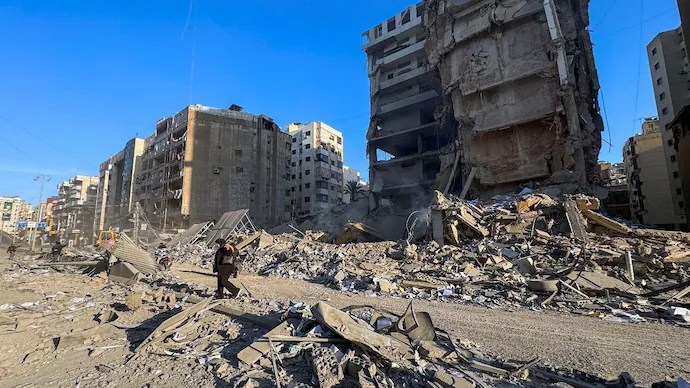
As the invasion of Iran grinds on and its boundaries expand, the House and Senate have rejected resolutions that would bring the savagery to a halt. I have to ask: What will it take to finally break the back of the Trump regime’s war madness?
Consider how Trump has conducted this latest war:
- He has violated his own prescriptions for avoiding US involvement abroad: no regime change, no new wars. He is conducting an aggressive war to overthrow the government of Iran, in gross violation of international and domestic law..
- He has ignored Congress, public opinion, and probably his military leaders in deciding on war, giving in instead to Israel’s pressure for regime change in Iran;
- He has largely been a disappearing act as national leader, relying on social media rather than the Oval Office to provide limited information;
- He has delivered surprise gifts to Moscow and Beijing, feeding their propaganda outlets that have denounced US lawlessness in defiance of the UN Charter and forcing Russia to come to Iran’s aid with intelligence on US targets;
- He has presided over an ever-expanding operation that has turned a military action into a full-fledged war, deepening divisions with key allies in Europe, exposing partners in the Middle East to Iranian retaliation, enabling Israeli expansion into Lebanon, and possibly setting the stage for a US ground invasion of Iran;
- He has shown ignorance of Iran’s actual situation, giving Iran’s people false hopes that they might seize power and setting the stage for another dictator.
- Perhaps worst of all, the administration has offered no clear explanation of why war is in the US national interest, why Iran constitutes an imminent threat to the US, and why ongoing negotiations with Iran were abandoned and are rejected now in favor of “unconditional surrender.”
Faulty Reasoning
Let’s discuss the last two points: the post-Khomeini situation in Iran and the lack of a war strategy.
Iran without the ayatollah is surely a good thing for the country’s people and for neighboring countries. But nothing good can come of an assassination and all-out assault by a US regime that disregards human rights and the rule of law—joined, moreover, by a partner, Israel, that has committed genocide in Gaza. Trump is proving that point every day with comments that show this President doesn’t have any idea of the forces that shape Iran’s post-Khomeini future. Iranians who oppose dictatorship are far from united in their conception of the country’s political and economic future. Trump was told in an intelligence report dated before he ordered attacks on Iran that the fragmented opposition forces were “unlikely” to topple the regime no matter how much force the US brought to bear (https://www.washingtonpost.com/national-security/2026/03/07/iran-intelligence-report-unlikely-oust-regime/). Trump’s preferred successors to Khomeini have been killed in US attacks, according to the President. Maybe he should have thought twice about bombing on such an immense scale. That leaves the field to another dictator, most likely Khomeini’s son. But Trump has declared the son “unacceptable,” as though Trump is already Iran’s viceroy. Trump insists that he must approve the successor, just as he approved Venezuela’s new president. All this speaks to America’s new imperialism. Yet it also displays the facile handling of regime change. For just as Venezuela’s new leadership is turning out to be not to Trump’s liking, with reports that the US might even arrest Delcy Rodriguez, so is another Khomeini in charge in Iran likely to thwart Trump’s designs. Worse still, the US invasion may result in even greater repression in Iran than was true before it.
As for the reasons behind the US attacks on Iran, the White House and the secretary of state have given several, none of which can be construed as threatening US security. These are:
- Iran’s support of terrorism.
- Iran’s nuclear “ambitions” (Rubio)
- Iran as a global threat
- Iran’s “malign activities”
- Iran’s interference with international commerce
- Collective self-defense with Israel.
A Monumental Strategic Failure
Trump’s war policy is a strategic failure that centers on use of the Venezuela intervention as a model but extends to unanticipated events The model is bankrupt: Unlike Venezuela, war on Iran has, not been a quick victory; it has failed to achieve regime change but may well have facilitated the entrenchment of the Iranian theocratic state; it has expanded the war far beyond Iran to include nearly all of the Middle East as well as a number of European countries; and Trump is trying to sign up Kurdish and other anti-regime armed sgroups to fight Iran’s forces with US air support, as a substitute for putting US boots on the ground.
Moreover, Trump’s war has caused considerable and avoidable loss of life, such as the 100 or so Iranian schoolchildren in one attack and Iranian sailors killed and left to drown in an attack on an unarmed warship; and it has significantly affected international commerce—the flow and pricing of oil, freedom of shipping, and the global supply chain.
This multifaceted strategic error will reverberate for years to come. Yet even though the war on Iran is far from over, Trump’s aggressiveness is not over. He is publicly talking about another adventure in regime change in Cuba.
Dedicated to the memory of Peter Van Ness, a dear friend and outstanding Asia scholar.
 In the Human Interest - Mel Gurtov
In regard to your post #497; let me say you have struck one (again) out of the traditional Ballpark. Aside from that, may I say that we, the military, fought for a cause,as wrong-headed and futile as that may be; it was nonetheless a CAUSE. Today’s military is nothing more than a gang of mercenaries; hiding under the fig-leaf of the Constitution; dammit!
Mike Peterson