
Reacting to Defeat
Donald Trump’s “Liberation Day” just got squashed. The Supreme Court on February 20 denied, by a 6-3 decision, the Trump administration’s power to impose tariffs under the 1977 International Economic Emergency Powers Act (IEEPA). The ruling invalidates tariffs for around one quarter of all imports to the US—those from about 20 countries plus the EU. Justice John Roberts, speaking for the majority, rejected the government’s argument that the IEEPA “gives the President power to unilaterally impose unbounded tariffs and change them at will. That view would represent a transformative expansion of the President’s authority over tariff policy.” No President has ever made such a claim, said Roberts. The tariffs “extend beyond the President’s ‘legitimate reach’” (https://www.nytimes.com/interactive/2026/02/20/us/politics/supreme-court-tariffs-decision.html).
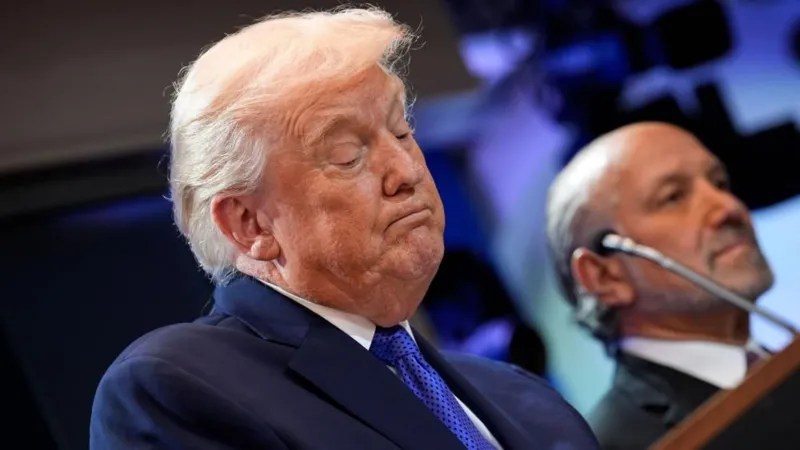
Trump reacted with characteristic outrage, personally attacking the majority (two of whom he appointed) and essentially accusing the six justices of treason. It seems that his immediate policy response was dictated by vengeance: a ten percent across-the-board tariff increase on all countries, which he extended to 15 percent a day later. But the trade law’s provision under which that policy was made limits the effect to 150 days, after which Congress must decide to extend it. No matter; Trump has plenty of other options under US trade law. Among them are tariffs on certain sectors in the interest of national security, tariffs imposed for unfair trade practices, and tariffs to counter countries that “uniquely discriminate” against the United States.
Trump is clearly determined to show that no Supreme Court decision is going to hamstring him in his determination to have absolute control over tariff policy. That presents Republicans with another Trump-induced choice: whether to stay the course and let Trump work his will, try to reinstate the high tariffs by legislation, or abandon the party in the interest of consumers and small businesses that have been hit hard by the tariffs. After all, the politics of tariffs rests in their cost in prices, inflation, and jobs. Elections are coming. Some Republicans have revolted against House leader Mike Johnson’s effort to keep everyone in line behind Trump. Half a dozen Republicans voted with Democrats this month to repeal tariffs on Canada. House Democrats are preparing other resolutions to challenge Trump’s tariffs.
Whither the Republicans?
Chuck Grassley, Republican of Iowa, supported the legislative route. “I’ve made clear Congress needs to reassert its constitutional role over commerce, which is why I introduced prospective legislation that would give Congress a say when tariffs are levied in the future,” Grassley said. He was no doubt responding to the critique of Congress by Justice Neil Gorsuch, who reminded this dysfunctional body that while “it can be tempting to bypass Congress when some pressing problem arises,” as Trump had attempted, “the deliberative nature of the legislative process was the whole point of its design.” But the Republican majority isn’t listening.
Democrats are having a field day. Senator Tim Kaine, Democrat of Virginia, who has led the Senate in four votes seeking to repeal Trumps tariffs, celebrated Friday’s ruling. “The Supreme Court did its job here in upholding the bedrock principle of separation of powers,” he said in a statement. “Congress must step up and do the same on tariffs, war powers, and many other issues.” Gov. Gavin Newsom said: “These tariffs were nothing more than an illegal cash grab that drove up prices and hurt working families, so you could wreck longstanding alliances and extort them,” Newsom said, addressing Trump in a statement. “Every dollar unlawfully taken must be refunded immediately — with interest. Cough up!”
Much to Think About for Everyone but Trump
Will the government refund importers for the fees it charged? Will taxpayers be repaid for the excess prices they paid due to the tariffs? How will foreign governments that concluded or are in the process of negotiating trade deals respond to the ruling? India, Indonesia, Japan, and South Korea all made significant concessions to the US to get lower tariffs, only to find that had they waited, they would have gotten lower tariffs without having to promise huge investments in the US or low to no tariffs on imports of US products. Several governments cut deals with the US at the sacrifice of domestic stability. India was one. A former Indian trade official said that the Supreme Court’s “ruling should prompt India to re-examine its trade deal,” which had required it to double its imports of American goods. Indonesia’s just-concluded trade deal with the US allows in US goods tariff-free in return for a 19 percent duty on Indonesian imports to the US. The Indonesian government might want to revisit that arrangement now. The European Union was on the verge of a trade deal with Trump. It has put the deal on pause, since many of its exports to the US will now be charged at a 30-percent rate..
Hakeem Jeffries, the Democrats’ leader in the House, wrote on X that the Supreme Court’s decision is “another crushing defeat for the wannabe King.” Trump is certainly on a roll in chalking up defeats. He should have seen this one coming. Sixty-four percent of Americans dislike his tariff policy for its obviously negative impact on all but the wealthy. Few people have been persuaded by the Trumpian argument that tariffs are paid for by foreigners. Not even the Supreme Court’s conservative majority, which has gone along with so many elements of Trump’s power grab, could accept that a president’s weaponization of tariffs may bypass Congressional authority under the law. Trump’s Republican cronies in Congress had better pay attention, since Trump clearly will not. “I don’t have to” work with Congress, Trump says. “I have the right to do tariffs.” Spoken like a wannabe king.
 In the Human Interest - Mel Gurtov