
The New Know Nothings
In the mid-19th century, an influential political party, the Know Nothings, carried on about the dangers of immigration—not from African slaves but from Europe. The Know Nothings faded out with the Civil War, but they have made a comeback—today’s Republican Party. When Donald Trump decided to run for president in 2015, he was advised that immigration should be his key issue. He took the advice, evidenced in his first campaign speech, in which he said: “When Mexico sends its people, they’re not sending their best. . . . They’re sending people that have lots of problems, and they’re bringing those problems with us. They’re bringing drugs. They’re bringing crime. They’re rapists. And some, I assume, are good people.” “Some.” Now, a decade later, he’s still at it, in baseless and vile rhetoric and most importantly in policy. His speech to the nation December 17 included a replica of his 2015 speech:
“Our border was open [under Joe Biden]. And because of this, our country was being invaded by an army of 25 million people, many who came from prisons and jails, mental institutions and insane asylums. They were drug dealers, gang members and even 11,888 murderers, more than 50 percent of whom killed more than one person. This is what the Biden administration allowed to happen to our country, and it can never be allowed to happen again. . . . foreign nations . . . took advantage of us at levels never seen before. They flooded your cities and towns with illegal aliens. They decimated your hard-earned savings. They indoctrinated your children with hate for America, released, really, I mean, they just released a level of violent felons that we had never seen to prey on innocent. They caused war. They caused mayhem. They caused a horrible situation all over the globe.”
Targeting Immigrants
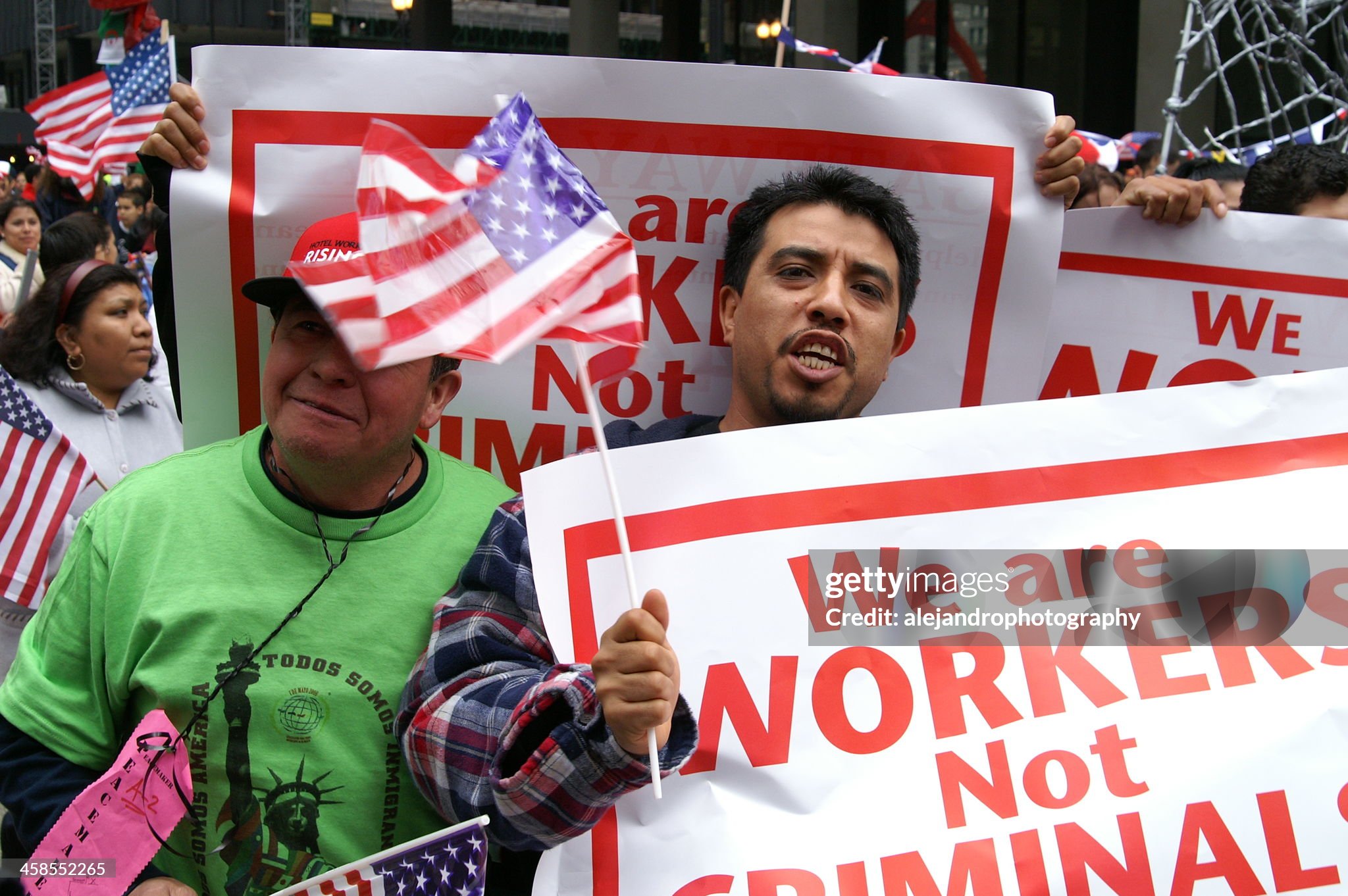
Trump has called migrants “animals,” denounced “shithole” countries from which immigrants come, equated migration with an “invasion,” and targeted them in “the war within.” J. D. Vance has embraced the same rhetoric, underscoring the threat to America’s way of life posed by immigration, “low-wage serfs” in particular.: “You cannot swap 10 million people from anywhere else in the world and expect for America to remain unchanged,” he said in a speech in July 2025 (https://singjupost.com/transcript-jd-vances-speech-at-the-claremont-institutes-statesmanship-award-event/). Never have US leaders offered a positive word about immigrants, choosing to ignore people who contribute to the economy and society in crucial ways, from harvesting crops to advanced science and from Social Security to tax payments. Instead, his department of homeland security boasts that it has deported over 605,000 people as of this month, the great majority of whom are law-abiding people who have over many years lived, worked, and raised their children here. Deportation has become a major industry, with private contractors for detention facilities and the transport of detainees to inhumane locations worldwide . To make the system more efficient, ICE reportedly plans to house 80,000 immigrant detainees in “seven large-scale warehouses holding 5,000 to 10,000 people each, where they would be staged for deportation” (https://www.washingtonpost.com/business/2025/12/24/ice-immigrants-detention-warehouses-deportation-trump/).
Here is a brief history of the Trump administration’s anti-immigrant campaign, which began with the Laken Riley Act. It mandated the detention of undocumented immigrants charged with burglary, theft, or other crimes. An executive order in January paved the way for “expedited” mass deportations. Another executive order the same month, now before the Supreme Court, seeks to end birthright citizenship for children of undocumented parents. An expansion of that order this month would deny US citizenship to immigrants who have violated the law even if they hold US citizenship. Other acts include a declaration of national emergency that militarized the southern border; the “One Big Beautiful Bill Act” in July, which provided $170 billion for immigration enforcement; travel bans and restrictions covering 39 countries, mostly in Africa and the Middle East; termination of special status for refugees from Afghanistan, Somalia, Cuba, Haiti, Nicaragua, and Venezuela; a policy shift that effectively blocks appeals for asylum; new rules aimed at preventing undocumented immigrants from receiving Social Security Act benefits and increasing identity theft prosecutions in immigrant communities; and vetting by the US customs service to include “anti-American” or “antisemitic” activity as negative factors in immigration benefit requests.
Unity in Diversity
Vivek Ramaswamy, the Republican candidate for governor in Ohio, said last week that bigotry in his party is redefining what it means to be an American—and is fueling hostility toward immigrants (https://www.nytimes.com/2025/12/19/us/politics/vivek-ramaswamy-anti-indian-hate.html). Responding to those who say that one’s heritage defines an American, Ramaswamy said “our lineage is not our strength. Our true strength is what unites us across that diversity and through that lineage.” His party’s leaders have other ideas. They meet with neo-Nazis and white supremacists, and they speak the language of Christian nationalism. They have made racism and bigotry defining features of the American political landscape–overt, out front, no longer on the fringe, embedded in public policy and foreign policy.
The good news here is that communities across the country, with support from blue-state governors and local officials, have supported their immigrant neighbors and done their best to restrain ICE and Border Patrol goons from seizing people off the streets, in court houses, and at airports. They have sounded the alert when ICE and Border Patrol show up, sometimes surrounded their vehicles to force their retreat, boycotted businesses that allow an ICE presence, and (in Illinois) authorized the arrest of ICE agents who provoke violence. Judges around the country have supported governors in consistently ruling against illegal deportations and (at least for now, the Supreme Court as well),National Guard deployments. But jurists have had to contend with a justice department that doesn’t believe in the sanctity of legal decisions and has hurried to dispatch people to countries known for suppressing human rights.
In short, the immigration issue is a battle for the soul of America. Lose it, and we lose democracy, the rule of law, and our humanity.
 In the Human Interest - Mel Gurtov
Excellent discussion of Trump’s disastrous immigration policies.
Missing from most discussions of immigration that come my way is the central fact that we Americans are all immigrants, even native Americans (the earliest immigrants also known as Indians) and the descendants of slaves (forced immigrants). Donald Trump’s grandfather Friedrich Trump (later Anglicized to Frederick) was born in Germany. Do Donald Trump’s slanders of immigrants apply equally to his family?
mark selden
Mark Selden
http://www.markselden.net
Founding Editor (2004-24), The Asia-Pacific Journal http://apjjf.orghttp://apjjf.org/
Dying for an iPhone: Apple, Foxconn and the Lives of China’s Workershttps://www.haymarketbooks.org/books/1468-dying-for-an-iphone. Haymarket Books 2020. Choice Academic Selection 2022.
A Chinese Rebel Beyond the Great Wall: The Cultural Revolution and Ethnic Pogrom in Inner Mongolia. University of Chicago Press 2023.
Mel–Regrettably not everyone shares your enlightened view that “the immigration issue is a battle for the soul of America”. Case in point: big agriculture. Growers, from soybeans to string beans are being hammered again by Trump’s tariffs and immigration policies. Some have pleaded for consideration: “we’ve covered your back, Mr. President, it’s time for you to cover ours”. Deportations and other labor restrictions have been killing their bottom lines. Yet even when Trump has thoroughly dishonored his very limited commitment to soften the financial constraints affecting growers, they have largely maintained their political support for Trump and absorbed a hit on their own financial interests. I would have imagined that for Big AG, “the immigration issue would have been seen a battle for the pocketbook of American farms”. If so, it has been a losing one.