
(Note to Readers: This post first appeared January 26. I’m adding the final section to take account of the most recent developments.)
The Israel-Hamas cease-fire has brought a measure of relief to Israelis and Palestinians. But everyone recognizes that what comes next is the real question—next, that is, assuming the prisoner-hostage exchanges proceed as agreed upon. That is a big assumption. Will the cease-fire last? Will Gaza be free of Israeli occupation forces? There are plenty of reasons for concern, including the following:
• The exchange of prisoners for hostages may bog down over numbers, especially on the Palestinian side. As many as 10,000 prisoners are being held in Israeli Defense Forces (IDF) detention centers as well as other prisons. Many prisoners have never been charged or sentenced, including children. How many prisoners there actually are, where they are, and whether Israel will release them are potential stumbling blocks.
• Prime Minister Benjamin Netanyahu is only fully behind stage 1 of the deal—a cease-fire and an initial prisoner-for-hostage exchange. Stage 2 calls for a permanent cessation of hostilities and the complete withdrawal of Israeli forces from Gaza. But, according to Yossi Fuchs, Netanyahu’s chief of staff, the deal “includes the option to resume the fighting at the end of phase 1 if the negotiations over phase 2 don’t develop in a manner that promises the fulfillment of the war’s goals: military and civil annihilation of Hamas and a release of all hostages.” Let’s recall that Netanyahu has never committed to anything short of total victory over Hamas.
• Even if agreement is reached on stage 2, the devil will be in the details. Ivo Daalder, a former US foreign affairs official, writes: “Who will govern the territory? Who will pay for rebuilding a landscape reduced to rubble? Who will feed the people, house them, put them through school, get them jobs, treat their diseases, wounds, and emotional traumas? and criminals praying on the vulnerable and weak?”
• Governing Gaza could be the source of another conflict, this one between the Palestinian Authority (PA) in the West Bank and Hamas. Although Hamas has been seriously weakened, its cells still command authority and will probably reject a PA attempt to govern. One Middle East expert group writes: “PA President Mahmoud Abbas’s office stated on January 17 that the PA holds legal and political jurisdiction over the Gaza Strip as the recognized governing authority of the Palestinian territories and is prepared to deploy administrative and security teams to the Gaza Strip. The ceasefire agreement does not task the PA with governing the Strip, nor does the ceasefire discuss post-war governance in any capacity. PA Prime Minister Mohammed Mustafa separately stated on January 18 that the PA has a ‘hundred-day plan’ for after the ceasefire goes into effect” (https://www.understandingwar.org/backgrounder/iran-update-january-18-2025). Left out of this commentary is Netanyahu’s longstanding opposition to PA rule in Gaza.
• Hamas, in fact, has been rebuilding its numbers even as its organizational strength has been seriously weakened. US intel just now is reporting that Hamas has recruited around 15,000 people even as it is said to have lost 20,000 fighters. Israel has frequently said Hamas must not be allowed to rise again. That goal would seem to be unrealizable.
• Israel’s efforts to redraw the lines in the West Bank, southern Lebanon, and Syria are not addressed in the agreement. The far right will be insistent that the IDF not withdraw from any of those occupied lands for security reasons. If the IDF remains there, we are bound to see more violence—from Hezbollah, Syrian militia, and Israeli settlers. Hezbollah is demanding that the IDF complete its withdrawal from Lebanon in accordance with their sixty-day cease-fire agreement last November. That agreement has now expired. The IDF is saying it will not meet the deadline.
• Ongoing violence in the West Bank, mainly by rampaging settlers and with support from Netanyahu’s far-right minister Bezalel Smotrich, could undo progress in the Gaza negotiations. Israel’s far right is strongly against the cease-fire and is surely looking for ways to sabotage it. The New York Times reported January 21 that in the West Bank, “settlers rampaged through several villages . . . torching homes and businesses and vandalizing vehicles . . . ” One Israeli human rights group called the attacks “pogroms” intended to sabotage the cease-fire agreement. In fact, settler violence has been going on for months.
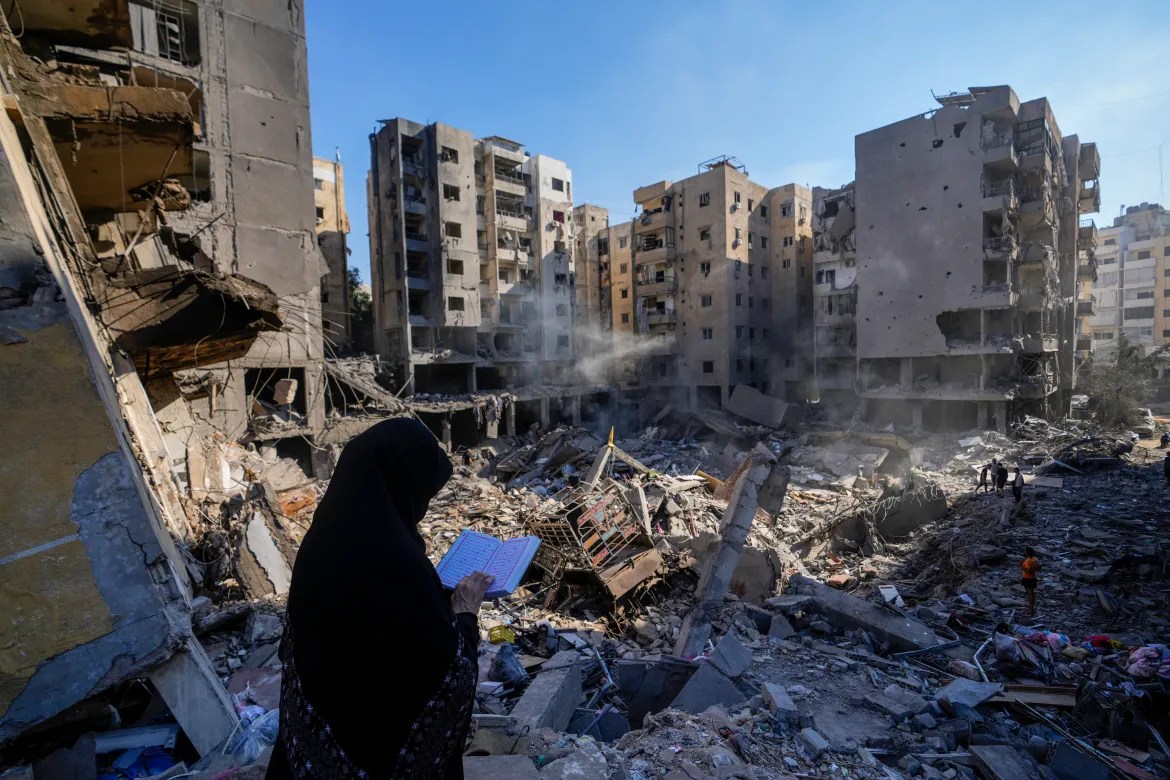
In short, the cease-fire deal may amount to no more than stage 1, leaving the IDF still deployed in Gaza as well as in southern Lebanon, Hamas still actively recruiting, and the Palestinian population unable to resume their lives with any semblance of security and well-being. Where is the Trump administration in all this? It will support continued Israeli occupation, repression of the Palestinian population, obstruction of Palestinian self-government, and support of Netanyahu should he decide to resume the war with Hamas. To Trump, Gaza is “a demolition site,” so “we just clean out that whole thing” (https://www.nytimes.com/2025/01/25/us/politics/trump-palestinians-jordan-egypt-refugees.html). He has asked Egypt (headed by one of his favorite autocrats) and Jordan to take in more Palestinians—presumably, those who survive the cleaning-out process.
The Latest Developments: Trump’s Intervention
Trump’s appointment of ardently (indeed, religiously) pro-Israel ambassadors to the UN and Tel Aviv, his voiding of Biden’s sanctions on violent settlers, his order to the Pentagon to release 2000-pound bombs for delivery to Israel, and his exemption of Israel from a decision to halt all foreign aid make clear that a just, peace-promoting settlement of the Israeli-Palestinian conflict is impossible under this administration. He wants to be the hero who enabled the return of all the hostages, facilitated normalization of Israel-Saudi relations, and saved Gaza from further destruction by forcible removal of its population (a violation of international law). But he’s very unlikely to achieve any of those aims. Instead, he’s contributing importantly to bringing the Israel-Hamas deal to an end.
Trump’s careless comments while Netanyahu was visiting Washington are the main reason. Trump said: “The US will take over the Gaza Strip, dismantle the bombs, and create an economic development that will supply unlimited numbers of jobs and housing.” He wants to evict the entire Palestinian population, convince Jordan’s king and Egypt’s strongman leader to accept them, and, in line with a plan first broached by Jared Kushner, build a new Riviera on Gaza’s waterfront. Trump reiterated those aims February 10, adding that Palestinians will not be allowed to return home under his plan. The Israelis are ecstatic: Gaza will be taken out of their hands, the Americans will protect the occupied territory, 2 million Palestinians will no longer be a security problem. Never mind Israel’s deal with Hamas; not only will Phase 2 be off the table, which means no permanent cease-fire, but also that Israel can fulfill the right wing’s fantasy of annexing the West Bank, with Trump’s support.
Unfortunately for Trump, this idiotic, inhumane, and corrupt plan finds little support outside Israel. Saudi Arabia has reiterated its opposition to any plan that does not ensure statehood for the Palestinians. Other Arab states have also expressed their opposition. Egypt and Jordan refuse to take in Palestinian refugees, citing security concerns. The UN leadership considers that the plan amounts to ethnic cleansing. Even some pro-Trump Arab American groups have shied away from this callous disregard for human rights. But Trump is unrelenting: He has threatened to create all kinds of chaos unless Hamas releases the hostages. Netanyahu has said the same, warning that the cease-fire will end otherwise.
Unless Trump yields on his fantasy or convinces King Abdullah II of Jordan (who is in Washington right now) to take in Palestinians, the hostage-for-prisoners exchange will stop (at this writing, Hamas has refused to release more hostages), the cease-fire may implode, and fighting might then resume. Thus has Donald Trump become the greatest immediate obstacle to peace in the Middle East.
 In the Human Interest - Mel Gurtov